Advertisement

Georgia’s extended squad for the 2026 Rugby Europe Championship offers an early insight into the thinking of the new Georgian management team , and while the core identity of the Lelos remains intact, this is very clearly a transitional group .
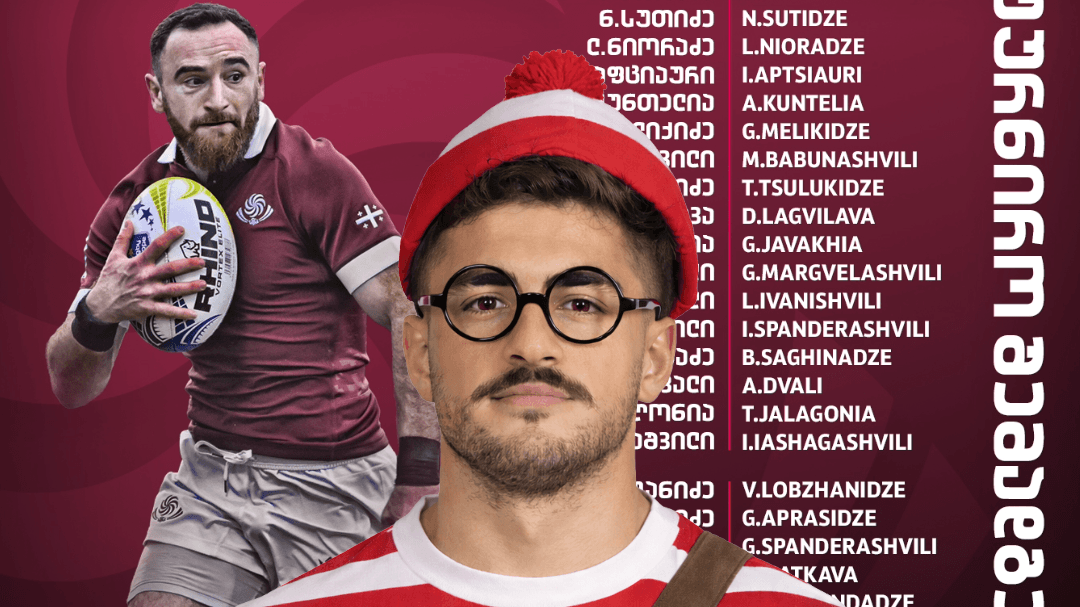
Georgia’s extended squad for the 2026 Rugby Europe Championship offers an early insight into the thinking of the new Georgian management team, and while the core identity of the Lelos remains intact, this is very clearly a transitional group.
The selection balances established France-based internationals, continued investment in the Black Lion pathway, and a handful of players who look very much like depth-builders rather than automatic starters. It is a squad designed as much for evaluation as it is for results.
The 2026 Rugby Europe Championship marks more than just another title defence for Georgia. It is the first real competitive outing under a renewed coaching structure, with Pierre-Henri Broncan and Marco Bortolami beginning to shape the Lelos in their own image.
While Georgia remain overwhelming favourites to retain the trophy they have dominated for almost two decades, this year’s group stage offers something different: controlled experimentation, selective renewal, and a clear attempt to widen the depth chart without sacrificing standards.
Perhaps the clearest indicator of change is the inclusion of nine potential debutants in the extended squad for the group stage matches.
The players in line for their first caps are:
Mamuka Mstoiani (prop)
Temur Tsulukidze (second row)
Davit Lagvilava (second row)
Gagi Margvelashvili (second row)
Andro Dvali (back row)
Giorgi Spanderashvili (scrum-half)
Davit Barbakadze (centre)
Nikoloz Rekhviashvili (wing)
Otar Metreveli (fullback)
Several of these names have appeared in extended squads before, but crucially have yet to cross the line into full international status. The decision to include them now suggests a coaching group willing to use the group stage as a development platform, rather than treating every fixture as a closed-door exercise for established internationals.
This is not wholesale rotation — but it is a clear signal of intent.
Alongside the newcomers, the new management has also opted to reintegrate experienced players who have been absent from the national setup in recent seasons.
Most notable is the return of Giorgi Melikidze, the Stade Français forward who last represented Georgia in 2021. With 26 international caps, his recall adds experience and leadership to a pack otherwise in transition.
There is also a reset for players who have drifted in and out of contention:
Ioane Iashaghashvili, who last featured in 2024 and earned a single cap against Australia, is included again
Luka Goginava and Luka Nioradze return after missing the most recent Rugby Europe Championship cycle
Rather than drawing a hard line between “old” and “new”, Broncan and Bortolami appear to be rebuilding continuity, bringing back players they believe still have a role to play.
The extended group consists of 34 players, split clearly along traditional Georgian lines:
20 forwards
14 backs
The makeup of the squad also reinforces where Georgian rugby continues to draw its strength:
27 legionnaires playing abroad
6 players from the Black Lion programme
1 domestic-based player from the Georgian First League
That domestic call-up is Nikoloz Rekhviashvili, a regular in Georgia’s sevens setup, now earning his first opportunity in the 15s environment. His inclusion underlines a growing openness to cross-code progression, especially in the back three.
Georgia’s title defence begins on February 8, away to Switzerland in Yverdon, before travelling to Amsterdam to face the Netherlands on February 15. The group stage concludes with a high-profile clash against Spain in Tbilisi (Avchala) on February 21 — a fixture that may yet see further squad adjustments.
The knockout stages follow quickly:
Semi-finals: March 7–8
Final: March 15
As 17-time champions, Georgia remain the benchmark — but this campaign is about more than silverware.
The first line selection underlines Georgia’s continued reliance on French club rugby for forward development.
Selected props and hookers:
Giorgi Akhaladze (Clermont)
Luka Goginava (Mont-de-Marsan)
Mamuka Mtoiani (Agen)
Vano Karkadze (Oyonnax)
Nikoloz Sutidze (La Rochelle)
Luka Nioradze (Aurillac)
Irakli Aptsiauri (Lyon)
Aleksandre Kuntelia (La Rochelle)
Giorgi Melikidze (Stade Français)
This is a solid, workmanlike unit rather than a headline-grabbing one. Notably, La Rochelle contribute two forwards, despite their struggles this season, suggesting the new management are prioritising individual development environments over team form.
There is continuity here, but also a sense that Georgia are stress-testing combinations rather than locking in a settled front row.
The second row selection leans more towards mobility and lineout reliability than sheer mass.
Mikheil Babunashvili (Black Lion)
Temur Tsulukidze (Oyonnax)
Davit Lagvilava (Perpignan)
Giorgi Javakhia (Toulon)
Gagi Margvelashvili (Racing)
The inclusion of Babunashvili reinforces the Black Lion’s continued role as a development hub, while Javakhia’s presence from Toulon brings top-end club exposure into the group.
This looks like a unit built for tempo, not just collision.
Georgia’s strength continues to lie in the loose forwards — and this group is arguably the most competitive area of the squad.
Luka Ivanishvili (Bristol)
Ilia Spanderashvili (Valence)
Beka Saghinadze (Lyon)
Andro Dvali (Perpignan)
Tornike Jalagonia (Provence)
Ioane Iashaghashvili (Mont-de-Marsan)
The balance between Ivanishvili’s Premiership exposure, Saghinadze’s leadership qualities, and emerging options like Jalagonia suggests genuine competition for places.
This is where Georgia can dominate Rugby Europe games — and the management clearly know it.
At halfback, Georgia opt for experience and control, with limited risk-taking.
Scrum-halves & fly-halves:
Vasil Lobzhanidze (Oyonnax)
Gela Aprasidze (Perpignan)
Giorgi Spanderashvili (Black Lion)
Luka Matkava (Oyonnax)
Tedo Abzhandadze (Aurillac)
Aprasidze remains the tempo-setter, while Matkava and Spanderashvili represent the next layer of succession. This feels like a managed transition, not a wholesale change.
The centres selected point to rotation and flexibility, rather than a fixed pairing.
Giorgi Kveseladze (Grenoble)
Giorgi Shvelidze (Brive)
Tornike Kakhoidze (Black Lion)
Demur Tapladze (Black Lion)
Davit Barbakadze (Lyon)
This is one area where Georgia may look functional rather than explosive, particularly against sides like Spain and Portugal, who increasingly challenge in broken-field situations.
Out wide, Georgia stay true to form.
Nikoloz Rekhviashvili (Kochebi)
Akaki Tabutsadze (Black Lion)
Tabutsadze remains Georgia’s most reliable finisher at this level, while Rekhviashvili’s inclusion hints at domestic reward.
At fullback:
Dachi Papunashvili (Aurillac)
Otar Metreveli (Black Lion)
The standout talking point is the absence of Davit Niniashvili.
Despite being one of Georgia’s most dynamic backs, his omission appears linked more to club context than form, with La Rochelle enduring a difficult campaign. There is a strong expectation that Niniashvili could yet be recalled, particularly for the Spain fixtures, where Georgia may need additional creativity and counter-attacking threat.
If this is a form-based exclusion, it is a short-term one.
This extended squad feels deliberately conservative.
Power and structure remain the foundation
Black Lion continues to feed the national setup
France remains Georgia’s key development environment
Risk is being managed, not embraced
Under new management, Georgia appear focused on stability first, evolution second. The Rugby Europe Championship will be used not just to win — but to assess who carries Georgia forward towards World Cup cycle continuity.
The real story may not be who is selected — but who steps up when rotation inevitably comes.