Advertisement

MLR is at a Crossroads with financial fragility and the looming Marathon to the Rugby World Cup 2031. As Major League Rugby grapples with the withdrawal of franchises like NOLA Gold and Miami Sharks, and the merger forming the California Legion, stakeholders face a bleak yet pivotal inflection point. While the league shrinks toward just seven viable teams, the race is on not only to survive but to build a financially sustainable foundation ahead of the 2031 Rugby World Cup.
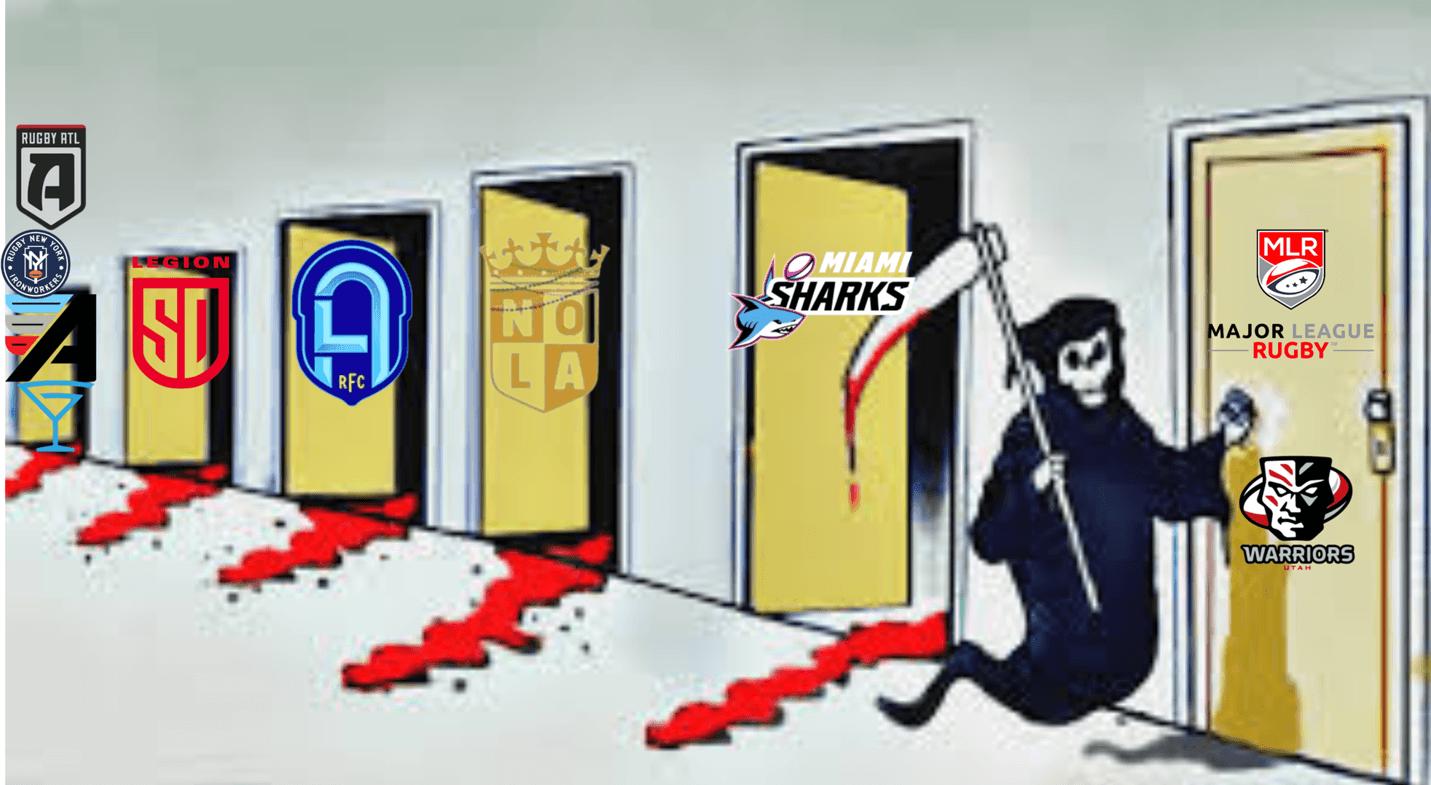
MLR is at a Crossroads with financial fragility and the looming Marathon to the Rugby World Cup 2031. As Major League Rugby grapples with the withdrawal of franchises like NOLA Gold and Miami Sharks, and the merger forming the California Legion, stakeholders face a bleak yet pivotal inflection point. While the league shrinks toward just seven viable teams, the race is on not only to survive but to build a financially sustainable foundation ahead of the 2031 Rugby World Cup.
MLR has lost 10 teams since its launch and with rumours of Utah Warriors running around to secure funding to avoid failure too, is the 7 teams the target for the league? There is clearly a gap in funding of the teams available, and having the league collapse would be a lot worse than having a core group to grow with. The league structure will need to be amended too, as the current conference model will not work with the current 8 teams remaining. There are 3 left in the Western Conference and 5 in the Eastern Conference model. A change to a 8 team division will incur more travel costs for the teams and fans, do they also only look to play 14 league games? Or have 3 games between each team, creating 7 additional games but take them on the road like the NFL has to expose the MLR to a wider audience. With significance of French investment with the likes of Antione DuPont at RFC LA before their merger, does games in France the rugby heartland of large fanbases offer a chance to save the MLR?
Before we take a look at the numbers, below are the teams that have ceased from the start of the MLR -
Austin Elite/Gilgronis - (2018 - 2022)
Glendale/ Colarado Raptors - (2018 - 2020)
San Diego Legio - (2018 - 2025)
NOLA Gold - (2018 - 2025)
Rugby United NY /Rugby New York - (2019-2023)
Toronto Arrows - (2019 - 2023)
Rugby ATL / RFC Los Angeles - (2020 -2023)
LA Giltinis - (2021 - 2022)
Dallas Jackals - (2022 - 2024)
Miami Sharks - (2024 - 2025)
MLR has to be realistic about its current financial status in the game, with a revenue scale suggesting MLR generates between $17–18 million annually. Even though its not an exhaustive figure, this modest figure underscores a tight margin for operational resilience. Media investments include the launch of ESPN streaming and The Rugby Network (now rebranded as TRN+) which has been a bright spot. TRN+ alone recently reported over $10.4 million in fan spending and a remarkable 55% increase in registered users, signalling strong digital monetisation potential for the league. In prior years, MLR has pursued up to $100 million in growth capital, banking on the looming Rugby World Cup to attract investors. Renewed fundraising—perhaps around rights deals or sponsorship—would likely be pivotal now. MLR have targeted Commercial Partnerships with deals such as the Legends global partnership (driving sponsorship revenue, business intelligence) and the Vitacost wellness alignment reflect strategic moves to diversify revenue. The evolving financial structure has meant the use of salary caps, team budgets, and player incomes remain. Many players report needing supplementary income through coaching or rugby-development roles, which highlights the lack of commercial support in the MLR for the players outside of the upper echelons. With attendances only being in the average of 4 - 5 thousand per game, then getting fans into stadiums has to be a priority to create the longevity and sustainability the MLR needs.
There are rumours that NOLA Gold are looking to re-enter the league in 2026 too, some say they have left the league this year due to not having a stadium to play . However, this is a big risk to run if the league opts to stay at 8 teams, will it become a 1 in 1 out system on the model. Are the Miami Sharks looking to enter the Super Rugby Americas league to focus their resource their with a predominate Hispanic team? Do MLR begin talks with the Super Rugby Americas to join forces and create a All Americas division and grow the game in this manner?
How the Numbers Shape the Road to 2031
Pillar Strategy & Impact Core consolidation are likely to see the MLR leaning into a smaller core of seven financially stable franchises (as Commissioner Benson suggests) might help reduce costs and concentrate resources. Media & digital growth will include expanding digital platforms like TRN+ to offer scalable revenue and fan engagement without the overhead of physical venues. Commercial expansion will require sponsorships beyond rugby-friendly brands—e.g., wellness, travel, lifestyle—could enhance stability. A renewed capital raise—anchored around RWC 2031—could provide the injection needed for infrastructure, player development, and marketing. A period of cost control is a must with limited revenues, disciplined expense management (e.g., shared operations, reduced travel costs, prudent staffing) is critical to accommodate the reduced league size too.
A Glimmer Before the Storm
World Rugby's continued support—especially as the U.S. gears up to host the 2031 and 2033 World Cups—could yield financial backing, technical resources, or broadcast cooperation. Comparisons to MLS are apt: both leagues weathered early instability to emerge stronger through consolidation, community-building, and strategic commercial expansion.
Is a Sustainable MLR Possible?
The league may be darkest before dawn—but a path out exists. With reported revenues hovering in the tens of millions, rising digital income, strategic sponsorships, and the potential for new capital infusion, MLR can aim for economic renewal. Central to this turnaround is a lean roster of teams, stronger media monetization, disciplined spending, and goodwill from global rugby bodies. If the league aligns its financial levers now, MLR won’t just survive—it may prove strong enough to captivate the world in 2031. With clubs merging to join fan bases and resources may offer a long form stability similar to the NFL Franchise system too. Taking MLR on the road could offer a wider fanbase but the time zone difference and travel costs will be a stumbling block for certain parties.