Advertisement

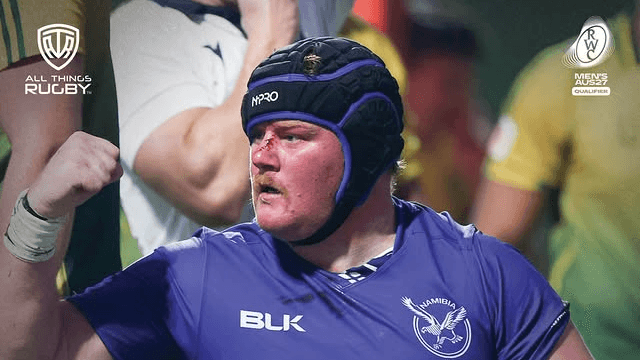
In Dubai, as part of the final qualification tournament for the 2027 Men’s Rugby World Cup, Namibia faced Brazil in a pivotal fixture. Namibia were under pressure to assert their traditional status, while Brazil looked to prove that they have entered a new phase of competitiveness. The result would significantly affect both sides’ tournament trajectories.


Bester J. (21'), Meyer J. (28', 56'), Ludick A. (37'), van der Merwe D. (44'), Nel J. (67')
Tries
Tranquez L. (9'), Moreno L. (16'), Massari L. (25'), Claudio M. (78')
Loubser C. (22', 29', 37', 45', 57')
Conversions
Tranquez L. (10', 17', 26', 78')
Penalties
Tranquez L. (6')
| # | Team | PL | W | L | D | PD | BP | PTS |
|---|---|---|---|---|---|---|---|---|
| 1 |  Samoa Samoa | 2 | 2 | 0 | 0 | 56 | 2 | 10 |
| 2 |  Belgium Belgium | 2 | 2 | 0 | 0 | 10 | 1 | 09 |
| 3 |  Namibia Namibia | 3 | 1 | 2 | 0 | -16 | 2 | 06 |
| 4 |  Brazil Brazil | 3 | 0 | 3 | 0 | -50 | 2 | 02 |
In Dubai, as part of the final qualification tournament for the 2027 Men’s Rugby World Cup, Namibia faced Brazil in a pivotal fixture. Namibia were under pressure to assert their traditional status, while Brazil looked to prove that they have entered a new phase of competitiveness. The result would significantly affect both sides’ tournament trajectories.
Brazil began brightly, leveraging their pace and width to unsettle Namibia early. Their backs showed intent and flair, finding space and challenging the Namibian defence with quick ball and movement.
Namibia, initially on the back foot, gradually stemmed the tide. They tightened their discipline, improved structure, and began asserting their heavyweight qualities through the forwards. Their set-piece improved and they started to win collisions, giving them more platform.
The red card was a turning point in the game, it was upgraded for no mitigation. However, that didn’t look the same in the replay.
By halftime, Namibia had worked their way into the contest and were able to control the final phases of play, turning momentum their way.
The second half saw Namibia begin to dominate more consistently. Their forwards set a strong base, their maul and carry game began to tell, and Brazil found themselves defending deeper and more often.
Namibia crossed for the opening score of the half — a testament to their forward platform and territorial control. Brazil responded well: they remained dangerous in broken play, countered effectively at times and kept the scoreboard pressure on. Another yellow card though, killed the game for Brazil and allowed Namibia pull comfortably clear.
In the final quarter, however, Namibia’s experience and physical edge told. They won key collisions, forced Brazil into errors, and converted their dominance into points. A late score sealed the match and underscored the difference in finishing and depth.
A late Brazil rally when Namibia went down to 14, did get a try but the clock was against them. They were also physically drained and fitness was crucial in this game.
Namibia
Their set-piece and forward platform were decisive — once they got into their rhythm, they controlled phases and field position.
They showed composure when the game got tight, and made the right decisions in the final quarter.
Their physicality and dominance in contact made it hard for Brazil to sustain long attacking sequences.
Brazil
They started strongly and showed plenty of attacking intent and pace — very positive signs for their development.
They struggled, however, to maintain that first-half tempo into the final 30 minutes when the physical battle turned.
Key moments — breakdown turnovers, defensive fatigue, set-piece losses — proved costly.
Despite the loss, the performance suggests Brazil are closing the gap and gaining experience at this level.
For Namibia:
This result will be viewed as a reaffirmation of their credentials in the Tier-2 landscape. They demonstrated that when they control the basics — set-piece, collisions, territory — they can perform under pressure. Going forward, they’ll want greater consistency early in matches, but the finish was strong.
For Brazil:
This loss, despite being disappointing, carries much longer-term positives. The fact that they started strong and were competitive for large parts is encouraging. Their next steps must be improving durability over 80 minutes, tightening set-piece and reducing errors. With that, they could turn promising performances into wins. Without the red and the yellow, Brazil could have seen this out.
Cliven Loubser was crucial in the Namibia fight back, then able to really control the game when the space opened up.
This was a meaningful, high-stakes contest that reflected much of what Tier-2 rugby is about: ambition, growth, physicality and learning. Namibia showed their quality under pressure, Brazil proved they have the tools to challenge — the difference came in depth, execution and phases when the game was on the line.
Namibia won on the night.
Brazil gained experience that could serve them even better moving forward.


