Advertisement

Portugal have named their squad for the 2026 Rugby Europe Championship , signalling a continued rebuild under head coach Simon Mannix and reaffirming the importance of regathering form ahead of the 2027 RWC.
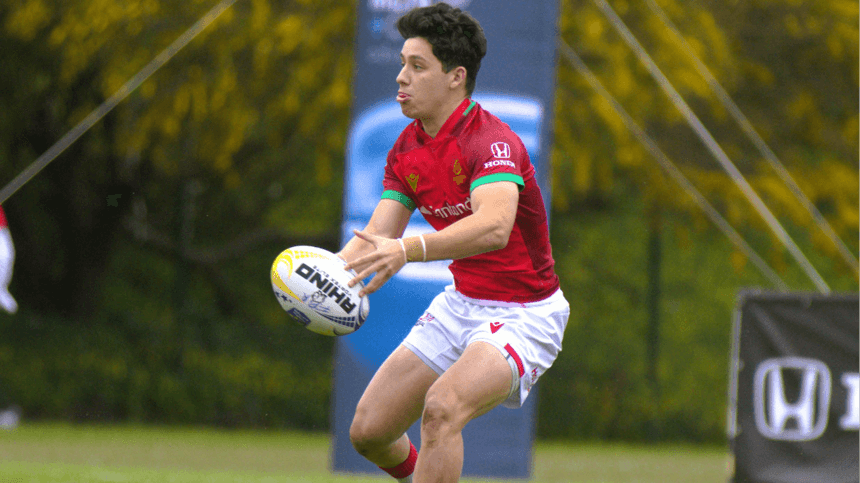
Portugal have named their squad for the 2026 Rugby Europe Championship, signalling a continued rebuild under head coach Simon Mannix and reaffirming the importance of regathering form ahead of the 2027 RWC.
With a mix of veteran experience, reinforcements returning from injury and exciting new faces pushing for caps, this Portugal squad represents both continuity and transition. The tournament now represents a vital opportunity to correct past inconsistencies and build momentum within Europe’s premier second-tier competition.
Three forwards returning from injury stand out as significant boosts to Portugal’s pack depth and physicality:
José Madeira – A proven force in the front row whose return strengthens scrummaging and adds much-needed experience after months on the sidelines.
Diego Pinheiro Ruiz – Brings mobility and breakdown presence; his return adds tactical versatility to the back five.
Diogo Hasse Ferreira – His power carries and defensive work rate were missed last season, and he now returns ready to make an impact.
Their inclusion not only deepens the forward cohort but also brings leadership and collision-winning ability that Portugal sorely lacked in parts of REC 2025.
The squad also includes one name that could be in line for his first international cap:
Manuel Fati – A powerful loose forward with strong ball-carrying instincts. Fati’s form domestically has earned him a place in the national setup, and the coaching staff clearly see him as someone ready to step up if given the chance.
This blend of experience and emerging talent reflects Portugal’s ongoing development strategy.
Afonso Tapadinhas — Mobile carrier, offering energy in the loose.
André da Cunha — Set-piece reliability from CF Os Belenenses.
António Prim — Top 10 stalwart providing continuity in the tight.
Cody Lee Thomas — Overseas professional with strong physical presence (FC Grenoble, Pro D2).
David Wallis — Hard-working forward from Os Belenenses.
Diego Pinheiro Ruiz — Back from injury; adds versatility.
Diogo Hasse Ferreira — Returning physicality and collision work.
Duarte Nunes — Strong in contact and workrate from Direito.
Duarte Torgal — Powerful carrier, consistent performer.
Guilherme Costa — Technical forward play from Técnico.
João Granate — Set-piece contributor from GD Direito.
José Lavos — Workhorse forward from Cascais.
José Madeira — Experienced returnee bolstering the front row.
José Monteiro — Strong scrummaging element.
Luis Lopes — Lineout support and workrate.
Luka Begic — Overseas experience in France.
Manuel Fati — Potential debutant adding fresh energy.
Martim Bello — Impactful ball carrier.
Martim Souto — Returning depth in the engine room (Aurillac).
Nicolas Martins — Pro D2 calibre physicality (Colomiers).
Nuno Mascarenhas — Robust forward play from Cascais.
Pedro Ferreira — Reliable back-row option.
Pedro Vicente — Lineout threat from Agronomia.
Santiago Lopes — Forward fluidity and athleticism.
Vasco Baptista — Front-row utility with set-piece acumen.
Alfredo Almeida — Clean striking runner from Cascais.
António Campos — Creative playmaker from Benfica.
Diogo Rodrigues — Strong runner capable of line breaks.
Domingos Cabral — Speed and attacking lines.
Guilherme Vasconcelos — Dynamic back-three option.
Hugo Aubry — French club experience sharpening defensive reads (Béziers).
Hugo Camacho — Can give you moments of magic, out of nothing.
Manuel Cardoso Pinto — Intelligent back-line organiser.
Manuel Vareiro — Overseas influence and tactical flair.
Martim Faro — Sharp attacking instincts.
Nuno Sousa Guedes — Line-breaking prowess.
Raffaele Storti — One of Portugal’s premier attacking weapons (Grenoble).
Rodrigo Marta — Finisher and try scorer with Pro D2 pedigree (Colomiers).
Samuel Marques — Dual-threat kicking and distribution skills (Béziers).
Simão Bento — Speed threat from Mont-de-Marsan.
Tomás Amado — Reliable back-line contributor.
Tomás Appleton — Leadership and game management in key moments.
Tomás Marques — Powerful runner providing go-forward.
Vasco Leite — Emerging back-line talent.
Vicent Pinto — Overseas ball carrier adding dimension (Colomiers).
What’s clear from this selection is a deliberate effort to:
Retain a core of experienced internationals
Bring back proven performers from injury
Give chances to emerging players poised to make their mark
Portugal’s overseas contingent — particularly those playing in France’s Pro D2 — brings a higher level of competitive exposure that has become invaluable in recent seasons.
Portugal enter this championship with the lessons of 2025 still fresh. Inconsistency cost them moments where they could have claimed better results, and those errors highlighted areas that must be fixed:
Scrum and set-piece stability
Discipline under pressure
Defensive organisation
Game-management execution
REC 2026 isn’t just about maintaining status — it’s about showing tangible progress.
Wins and consistent performances here will:
Lift morale
Cement belief in the current squad philosophy
Lay stronger foundations heading into future global qualification cycles
Portugal have the players on paper. What they now need is performance continuity.
This squad announcement carries optimism — but also scrutiny. The return of key forwards and a chance for new talent like Manuel Fati to step up sets the stage for a crucial tournament.
Results are non-negotiable. Growth without performance gains isn’t progress. Portugal’s REC 2026 ambitions will be judged not merely by selection, but by how this group delivers on the pitch.