Advertisement

Round 4 of Super Rugby Pacific felt like the weekend when the season finally started telling the truth. The tempo was higher, the collisions sharper, and a few sides were quietly stripped of whatever early season illusions they were still clinging to. The table will say it is only March, but the rugby suggested something closer to June, with matches decided not by loose moments of brilliance but by the cold, unglamorous details that coaches obsess over and players learn to respect.
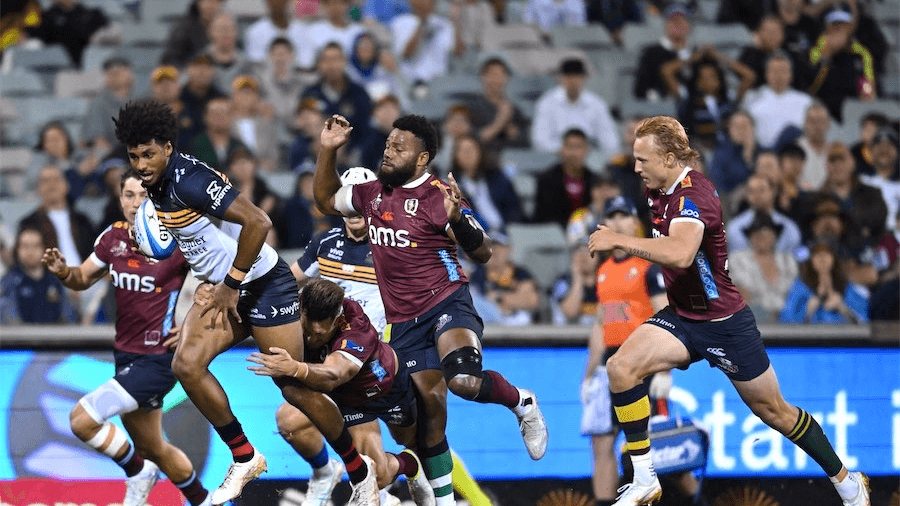
Round 4 of Super Rugby Pacific felt like the weekend when the season finally started telling the truth. The tempo was higher, the collisions sharper, and a few sides were quietly stripped of whatever early season illusions they were still clinging to. The table will say it is only March, but the rugby suggested something closer to June, with matches decided not by loose moments of brilliance but by the cold, unglamorous details that coaches obsess over and players learn to respect.
What stood out most was how clearly the contenders carried themselves. The best organised teams used the boot with purpose, squeezed territory, and trusted their systems to suffocate opponents rather than chase miracles from deep. In contrast, those drifting toward the middle of the pack looked exactly that way, leaning on individual sparks while their structure frayed whenever fatigue and scoreboard pressure combined. There was still room for the odd bounce of the ball and a moment of chaos to swing a contest, but this round belonged to the sides who managed the last twenty minutes with clear heads and disciplined hands. With that in mind, let us dive into the Round 4 action and see who backed up the hype when the whistle actually blew.


Tupaea (2'), Coombes-Fabling (4'), Carter (15', 47', 53'), Narawa (29'), Foketi (32'), Brown (60'), Thompson (65')
Tries
Vaihu (9'), Ta'eiloa (21', 42'), Ofa (78')
McKenzie (3', 5', 30', 54', 61', 66')
Conversions
Garden-Bachop (10', 22')
This was the kind of Chiefs performance that makes opposition analysts reach for a fresh notebook. They played with a control that bordered on clinical, stacking up 55 percent possession, while still looking like they had another gear in reserve.
This was not a night of miracle balls and speculative chaos; it was a structured dismantling built on workrate, width and a refusal to ease off once the game was effectively done.
From the opening exchanges, the pattern was clear. Samisoni Taukeiaho and the tight five laid the platform with hard, direct carries, and once the Moana defence started to bend, the Chiefs’ backline happily did the rest. Quinn Tupaea and Liam Coombes Fabling both chewed through triple figures in metres, with Tupaea and Emoni Narawa punching holes almost at will as the home side racked up 31 tackle breaks and nine offloads.
At the heart of it all, of course, was Damian McKenzie conducting traffic like he had the remote in his hand. He finished with fifteen points from three tries and six conversions, but the numbers only tell half the story; his seven kicks, sharp distribution and willingness to play to the corners kept Moana pinned in places they did not want to be. By the time Tyrone Thompson and Kyle Brown joined the party off the bench, the Chiefs were running onto passes rather than into traffic, and every attacking set looked like an audition for highlights duty.
Moana Pasifika had their moments, and they were not insignificant. Semisi Tupou Taeiloa carried fifteen times for 115 metres and two tries, Glen Vaihu finished with eleven defenders beaten, and Tevita Ofa added a late score to push the visitors beyond six hundred metres with ball in hand. The problem was not their ability to strike, but their capacity to sustain it; too many turnovers, too many lineout losses and too much time spent tackling rather than building pressure.
If there was a blemish for the Chiefs, it came in the discipline column. Sixteen penalties conceded is far too generous for a team with genuine title ambitions, and on another evening, against another opponent, those cheap entries into the wrong end of the field could have shifted the tone entirely. Round 4 is too early to anoint anyone, but on this evidence the Chiefs are not just winning, they are building a game that looks sustainable deep into the season, and that is a far more worrying prospect for everyone else.


Reilly (12'), Jorgensen (29', 61')
Tries
Aumua (14'), Lakai (18'), Sullivan (32', 58'), Proctor (42', 46', 79'), Enari (63'), Rova (77')
Creighton (13'), Harvey (62')
Conversions
Barrett (19', 43', 47', 59'), Harkin (64'), Cashmore (78', 80')
This was the kind of Hurricanes performance that turns a tough away trip into a teaching tape. They absorbed the Waratahs’ early enthusiasm, calmly rode out the Allianz Stadium energy, and then spent the next hour stretching, probing and finally dismantling a defence that simply could not live with their pace or precision. The numbers tell the story as bluntly as the scoreboard did: the visitors carried for more than 900 metres to the Waratahs’ 565, broke the line twelve times to three and finished with almost thirty tackle busts. It was ruthless, but it was not reckless; this was a side that knew exactly when to twist the knife.
For a while, the Waratahs looked like they were right in it. Triston Reilly’s opener and Max Jorgensen’s first try gave the home crowd the sense that this might be one of those rare nights when Sydney rugby gets to enjoy itself without irony, and at 12–7 and then 12–12, the contest felt genuinely alive. The Tahs shaded possession, matched territory and were not afraid to move the ball, with Jorgensen and Andrew Kellaway combining for more than 140 running metres and Reilly busy on both sides of the ball. But as the half wore on, small cracks began to appear in their ruck accuracy and decision making, and against a side with the Hurricanes’ finishing power, small cracks do not stay small for long.
The Hurricanes’ response was as composed as it was brutal. Asafo Aumua and Peter Lakai did the early damage around the fringes. Billy Proctor and Bailyn Sullivan tore through the midfield and edges, combining for more than 200 metres, five tries and a highlight reel that will be doing the social rounds all week.
For the Waratahs, the review will not be pretty but it will be honest. Missing 28 tackles, conceding 15 turnovers and losing six rucks in contact is a brutal triple punch at this level, especially when your opponent is built to punish every slip in connection and spacing. In a round that already felt like the season was starting to separate the genuine contenders from the rest, this was a stark reminder that effort and ambition need to be matched by discipline and detail, or the Hurricanes will turn your home fixture into their latest statement win.


Lasaqa (9'), Lowe (27', 53'), Tangitau (58', 69')
Tries
Ekuasi (20'), Williams (35'), Stewart (39'), Tizzano (64'), Bridge (66')
Millar (10', 28', 54'), Pasitoa (70')
Conversions
Donaldson (22', 36', 40')
Millar (14'), Pasitoa (76')
Penalties
This was the sort of loss that will sting for the Western Force, but it will not break them. They have been living out of suitcases for a fortnight, went to Dunedin and traded blows with a Highlanders side that emptied the clip on attack, and still found a way to be in the contest deep into the final quarter.
The Highlanders started and finished like a side determined to put on a show at home. They struck early through Veveni Lasaqa and built sustained pressure off the boot of Cameron Millar, then kicked again when Jonah Lowe and Caleb Tangitau began to find space on the edges. Yet even as the hosts punched holes and the crowd roared, the Force kept finding ways to swing back.
For large stretches either side of half time, it was the visitors who were dictating terms. Their kicking game, built around Nathan Hastie’s high bombs and Ben Donaldson’s contestables, repeatedly asked questions of the Highlanders’ back three, and when they earned field position their maul and close range carry work went to work. Vaiolini Ekuasi’s pick and go, Jeremy Williams’ effort and Hamish Stewart’s try on the stroke of the break spoke to a pack that refused to be bullied, even as the missed-tackle count crept into uncomfortable territory. At 21–17 to the Force at the interval, you could almost hear Super Rugby schedulers quietly pencilling this in as the upset of the round.
In the end, though, the Highlanders’ strike power out wide and their ability to string together momentum proved decisive. They still made life hard for themselves, losing a worrying number of lineouts and finishing with fourteen men after injuries forced them to play short, but they managed the last ten minutes with a game awareness that will please Jamie Joseph as much as any highlight.
For the Force, the frustration will sit alongside a quiet sense of progress. After two weeks on the road in New Zealand, a 1–3 record hardly screams contender, but the underlying fight and attacking shape are there. And as if to underline that this is a club moving forward, they closed the weekend not with excuses but with a statement signing, securing NRL winger Zac Lomax on a two year deal that signals real intent about adding genuine X factor to this backline. If they can tidy up the detail and give themselves a home stretch with a bit more petrol in the legs, nights like Dunedin will start turning from near misses into valuable away scalps


Clarke (3', 8', 48'), Vai (21')
Tries
Taylor (32'), Reihana (36')
Barrett (4', 22', 49')
Conversions
Barrett (74')
Penalties
Reihana (2')
The Blues’ win over the Crusaders felt less like a hot streak and more like a statement that this side finally knows exactly who it is. They did not dominate possession or territory, but they controlled the moments that mattered, leaned into their strengths, and trusted their senior playmakers to shape the night. Beauden Barrett’s twelve carries and eighteen kicks were the metronome, constantly nudging the game into the right parts of Eden Park, while Caleb Clarke and Zarn Sullivan took full advantage out the back, combining for well over 230 running metres and turning half chances into decisive blows.
Up front, the Blues were not perfect but they were honest. Sam Darry, Josh Beehre and Dalton Papalii hit double figures for carries and tackles, tightened up the middle of the park and ensured the Crusaders’ big runners rarely got clean, unopposed ball. The set piece numbers tell an interesting story: six scrums from six and seventeen Crusaders lineouts from nineteen suggest a fairly even contest, but the Blues pinched a key throw, won important collisions on exit and forced the visitors into twenty one turnovers across the eighty.
The Crusaders had their usual standouts but their attack never quite felt in sync. Too many mistakes, too many loose passes under pressure, and a penalty count of just four that spoke to a side not short of discipline but short of sustained field position. The Blues, by comparison, were happy to absorb periods without the ball, make 156 tackles, and then strike with precision when opportunities finally did appear.
In the bigger picture, this was the kind of performance that shifts how the Blues are talked about. Clarke’s hat trick and Barrett’s fourteen points will lead the headlines, but underneath the highlights sat a team that embraced the grind, trusted its defensive system and stayed patient instead of chasing chaos. Beating the Crusaders is never just another win, and doing it with this mix of control, physicality and edge suggests the Blues are building something that can travel deep into the season rather than peaking in March.


Shaw (2'), Cale (8', 35'), Muirhead (61'), Reimer (72')
Tries
Anderson (13'), Flook (27'), Daugunu (78'), Gordon (84')
Lonergan (3', 36', 73')
Conversions
Werchon (14', 28', 80', 85')
Penalties
Werchon (21', 40')
This was the kind of Australian derby that does nothing for the blood pressure of coaches but does everything for the argument about letting the game breathe. For eighty minutes the Brumbies and Reds went at each other with a balance of structure and ambition, sharing possession almost perfectly. Eleven penalties against the Brumbies and nine against the Reds is hardly old school permissive, but in the context of the tempo and intent on show, it felt like the officials struck something close to the sweet spot between safety and spectacle.
The Brumbies will feel they did enough to win this game, and with some justification. They scored five tries to the Reds’ four, dominated the lineout with a perfect 17 from 17 return and a steal for good measure, and were comfortably the better side at scrum time despite coughing up two losses on their own feed. Charlie Cale’s double, Lachlan Shaw’s early effort and Andy Muirhead’s second half finish all came from the kind of multi phase pressure and set piece accuracy that has been their identity for a decade.
And yet, when the contest loosened in the final ten minutes, it was the Reds who played with the clearer heads. Filipo Daugunu’s late try dragged them within a score, Louis Werchon kept his nerve from the tee to finish with fourteen points and then came that last act, Carter Gordon stepping up in the eighty third minute, spotting a fractured edge and backing his acceleration to slice through for the winner. It was the kind of moment that divides living rooms and comment sections, because by then fatigue, scramble defence and interpretation are all colliding at once; was there a marginal line speed, a hint of obstruction, a breakdown that could have gone either way.
Here is where the broader debate really lives. You could slow the footage down, freeze frame every clean out and spend Monday morning searching for technical infringements, but you would also strip that finish of the very spontaneity that made it so compelling. Over the course of the match the Reds conceded fewer penalties, turned the ball over more often and yet kept playing, kept attacking space, and were rewarded because the officials allowed advantage to unfold rather than suffocating every contest at source. Gordon’s try will be replayed as the latest flash point in the “let it flow versus tighten it up” argument, but in the context of a 34–31 classic, it felt like a fair reflection of two teams who were given room to decide things themselves. The Brumbies can be frustrated, and they will be, but if this is the template for how Australian derbies are going to be officiated, most players, and most viewers, will happily take that trade off.


